19 years in development · software and electronics
I build software systems and devices — from idea to working solution
Web applications, microcontroller-based devices, and automation. I help define the requirements, design the solution, build it, and take it through launch

Areas of work
Web systems and applications
I design and build web applications, client portals, internal tools, APIs, and integrations. I handle the architecture, backend, interface, and launch.
Design · development · launchMicrocontroller-based devices
I develop firmware and device prototypes with sensors, actuators, and communication interfaces. When needed, I connect the device to a server or application.
Requirements · prototype · firmwareMonitoring and control systems
I bring equipment, sensors, software, and external services together into one system, automating data collection, monitoring, and control.
Equipment · data · software logicHow the work is structured
Understand the task
We define what the system needs to do, where and by whom it will be used, and which equipment and services it must work with. We capture constraints and acceptance criteria.
Outcome — requirements, plan, and estimateBuild in stages
Architecture and a prototype come first, followed by the main development, integration, and testing. Each stage produces something you can review and evaluate.
First result usually within 1–2 weeksLaunch and develop further
After launch, I can maintain the system, add features, and adapt it to new conditions. The code, documentation, and technical decisions remain clear to your team.
Project handoff or ongoing workStarting a project
Requirements first. Then the solution, schedule, and cost
We begin by working through the goal, operating conditions, and constraints. I then propose a technical approach, divide the work into stages, and provide a realistic estimate. The first result you can evaluate usually arrives within one to two weeks.
Discuss a projectEngineering approach
A solution has to work beyond the demo
Software and physical devices require different tools, but the development process is the same: clear requirements, verifiable stages, and testing under conditions close to real use.
I document important decisions, account for constraints early, and show progress throughout the project. The result is not an experiment, but a system that can be used, maintained, and extended.
Clear requirements
Before development begins, we define the purpose, constraints, and what a finished result looks like.
Testing under real conditions
The prototype and intermediate versions are tested not only on the bench, but in the intended usage scenario.
A transferable result
Readable code, documentation, and explainable technical decisions — without dependence on one developer.
Where I've sat
Developer, then lead, then CTO of two early-stage startups — and ten side projects of my own that taught me what founders actually feel when a release slips. I've been on both sides of the estimate, which is why mine tend to hold.
Notes from the work
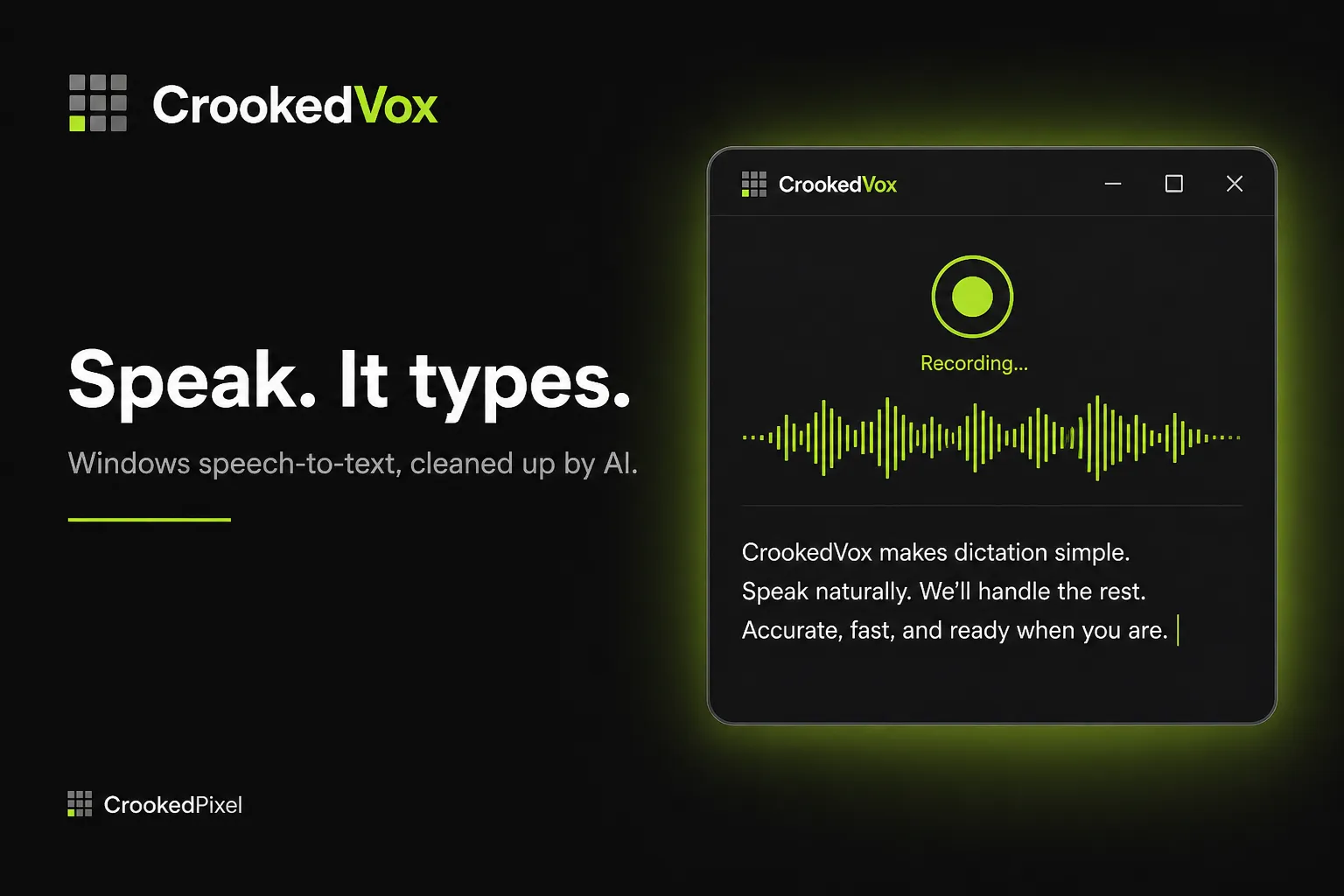
All writing →CrookedVox Now Types While You Talk
Text shows up while you're still speaking, offline no longer stops at 25 seconds, the interface speaks Russian, and updating takes one click.
Sep 2026 · 2 min read AIGigaAM: Speech to Text With No Internet
My voice input runs offline now. GigaAM, the speech model Sber released openly, sits on my own machine and handles Russian well.
Aug 2026 · 2 min read AIAI and the Illusion of Understanding
AI can give you a convincing model of the world in seconds. That speed can feel like understanding — and hide the fact that you never went through the process that actually produces it.
Aug 2026 · 4 min read